7/11/08

Like Having Sex with an Ex


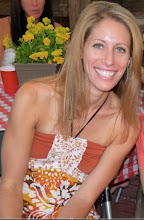
I went back on TV Thursday.

(thx to Bill for the screengrab and Joe for the video)

Truth be told, it felt a little strange to be on the subject side, but it didn't make me miss the past. In fact, it had just the opposite impact. I could not be happier with where I am now.



7/10/08

Seriously?


Fact-check your own writing much?

Health Care for America Now...us.

Americans for Healthcare...not us. A project of SEIU.

Why is this so difficult to figure out?

Oh, and how about doing some reporting? "More reporting" seems a little ambitious for you at this point.

7/9/08

No Means No


Which part of this sentence on the HCAN website is unclear?
We do not respond to solicitations for advertising.
Stop calling me. And please stop saying things like, "I know you said you don't want ad solicitations, but..."

Do The Work


I don't have time to launch into specifics right now, but it really is disconcerting how little "reporting" is actually taking place anymore.

It's a good idea to call the organization you're writing about before you just repeat secondhand information as if it's fact. Even if you're writing a negative story about someone or something, journalism 101 states you must at least make an effort to contact the entity before you run with it.

You might just find out you were wrong. Very very wrong.

7/8/08

In Case You Missed It

We're advertising:


Greatest Hits


This is by no means a complete collection. It's just the national blogs and some of the larger print outlets:

Greg
Sam
Jane
Duncan
Ezra
NYT Caucus
This Modern World
Wonkette
WaPo Trail
Sirota
Susie
Matthew
Reuters
MSNBC

Launch Day


Here's the AP write:
Money, ads give health care top political billing
By JIM KUHNHENN

WASHINGTON (AP) — Health care is returning as a campaign issue, with special interest and advocacy groups preparing to spend at least $60 million to push politicians to embrace universal access to medical coverage.

The efforts, one by a coalition of labor and liberal groups and another by AARP, also include direct appeals to the presidential contenders and congressional candidates to change a system in which millions of people are without coverage.

A coalition of labor unions and Democratic-leaning organizations called Health Care for America Now on Tuesday was announcing a $40 million campaign to promote affordable health care coverage for all. The group is spending $1.5 million on a national cable ad, and print and Web advertising. It also plans to spend $25 million on advertising through the end of the year. The effort will concentrate on key congressional districts in 45 states, where the coalition also plans to deploy 100 organizers.

A top goal is to encourage lawmakers to devise a plan that would offer consumers the choice of retaining their current private coverage, choosing a new insurance plan or joining a government-run plan. The options are designed to address one of the insurance industry's central criticisms of President Clinton's failed plan.

"We've got to make the plan that we put forward reasonable to people who don't have health insurance and desperately need it, but also not threatening to people who do have fairly decent health care and would gladly support health care change as long as it doesn't undermine what they've got," said Roger Hickey, co-director of the liberal Campaign for America's Future, part of the Health Care for America Now coalition.

Still, sharp disagreements are certain to surface.

The insurance industry's proposal for expanded health care puts more emphasis on private plans than on public ones. And the coalition's ad, which is to air Tuesday on cable, makes clear that the old battle lines remain. "We can't trust insurance companies to fix the health care mess," the ad states.

The AARP-led group is airing an ad on national cable and in markets in key states calling on the presidential candidates — Democrat Barack Obama and Republican John McCain — to keep discussing health care and financial security. The seniors' advocacy group, acting on behalf of a coalition called Divided We Fail, plans to spend more than $20 million through Labor Day to push for bipartisan solutions to health care and Social Security.

McCain would provide refundable tax credits of $2,500 for individuals and $5,000 for families that buy health insurance, but would not require universal coverage. Obama would require coverage for children, not adults, and would aim for universal coverage by requiring employers to share the cost of insuring their employees.

"We felt we needed more than policy ideas, but the political will to actually get something done," said Nancy LeaMond, an AARP executive vice president.

To that end, the AARP is working with partners from across the ideological spectrum — the Business Roundtable, the National Federation of Independent Business and the Service Employees International Union. They are asking candidates to sign pledges that state: "I am committed to working with my colleagues across the aisle to develop and implement policies that provide all Americans with access to quality, affordable health care and lifetime financial security."

To the membership of Health Care for America Now, bipartisanship is less important than adherence to its principles, which also include greater regulation of health insurance companies, costs based on a family's ability to pay and cost controls without sacrificing quality.

"The whole goal is to create a mandate next year for the president and Congress to enact health care reform that meets our principles," said Richard Kirsch, the coalition's campaign manager and a health care advocate who has worked on reform legislation in New York.

Health Care for America Now members include such unions as the SEIU, the AFL-CIO, and the American Federation of State, County and Municipal Employees, and Democratic-leaning organizations such as the Center for American Progress, MoveOn.org, and the Campaign for America's Future. Many of the groups have endorsed Obama or have members advising his team.

Neither coalition plans to become involved in the presidential contest, though Kirsch made clear that Obama's plan meets Health Care for America Now's principles and McCain's does not.